Fulfilment
Part of Subscription fulfilment
Tracking replacements for damaged subscription shipments
A damaged subscription parcel needs a remedy linked to the original cycle.
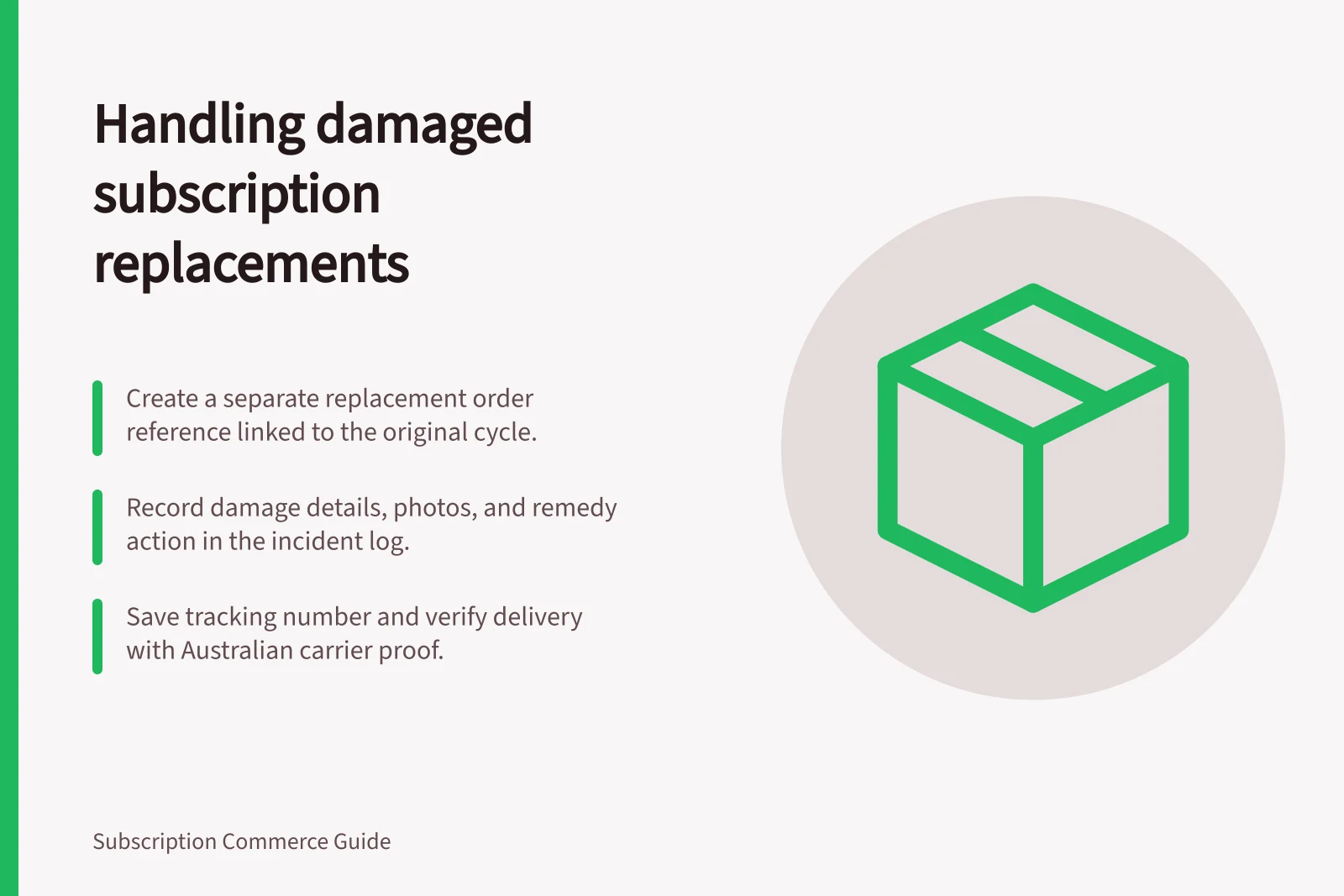
Track a damaged-parcel replacement as a separate fulfilment event, linked to the original order and subscription cycle—not as the next routine box. Give it its own replacement order reference, stock record, carrier tracking number and outcome so the remedy stays distinct from the next scheduled shipment.
Record the original incident
Record the original order and cycle IDs, incident date and time, affected product and SKU, quantity, issue type, and where the damage was found. Add photos, estimated retail value, the customer’s preferred remedy, any safe-use concern, the action taken and its outcome. Decide whether to replace the whole box or only damaged components.
Create a separate replacement order reference and keep it beside the original order and cycle IDs. Shopify distinguishes a subscription contract from each billing cycle, which carries a period of billing and delivery information; editing a cycle can change an upcoming order without changing the source contract. Keep a one-off remedy identifiable rather than treating it as the next cycle.
If using Loop, its order tags can filter and organise subscription orders, while dynamic tags can record a subscription ID and billing-cycle number. Use a distinct order tag such as replacement; Loop’s Recurring order tag identifies routine recurring orders, not the replacement event.
For an internal status field, record the sequence from stock reserved and label created through carrier accepted, in transit, delivery attempted and delivered, then mark the outcome resolved or unresolved. A label can exist before the carrier’s first scan, so do not treat label creation as proof the parcel has been handed over.
Close the loop
Save the carrier name and tracking number against the replacement order reference. Check carrier events for the parcel’s identity, place, time and status; retain delivery attempts and proof of delivery where offered. Send the customer a clear dispatch estimate and verify delivery.
For Australian carrier claims, keep the tracking number and supporting documentation; loss or damage claims can be lodged online through the carrier’s website. Australia Post is one named courier, and standard carrier liability may be limited, so check the applicable cover.
Reconcile shipping cost, any carrier claim and inventory adjustments. If damage clusters by product or route, review packaging before increasing replacement volume.
Ask whether the replacement solved the problem, especially when contents are personalised or time-sensitive. Measure success by whether the customer’s experience is corrected, not by whether another label was printed.