Inventory Planning
Part of Subscription inventory planning
Planning stock for skips, pauses and new signups
Skips, pauses and new signups change subscription demand in different ways.
Skips, pauses and new signups change subscription demand in different ways. A skipped order may return next cycle; a pause can remove several future orders; a new subscriber may start immediately or after a cut-off. Keep those states separate when deciding how much stock to buy.
Apply each change to a date
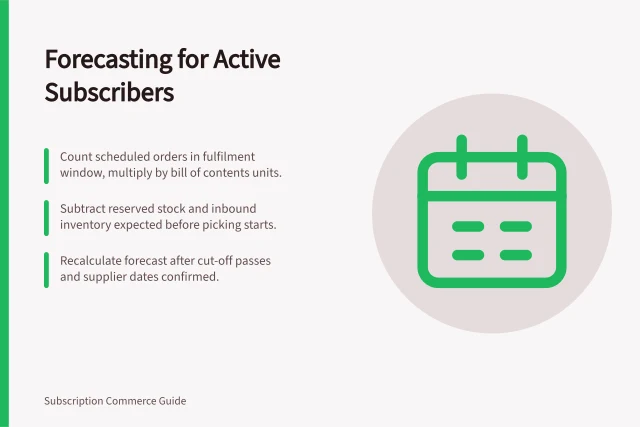
Build the forecast from scheduled upcoming orders, not a snapshot of active accounts. For each fulfilment window, subtract confirmed skips for that order and subscriptions paused through the window. Add reactivations and new signups only when their first order is scheduled in that window.
A plan that uses “active subscribers × one box” ignores these timing differences.
Record when customers can still change their next order. If a supplier requires a purchase order earlier than the customer skip deadline, inventory planning has unavoidable uncertainty. Show the committed baseline and an allowance based on relevant recent behaviour, rather than presenting one precise forecast as guaranteed.
Track skips, pauses, swaps and reactivations separately, then translate them into the merchant's actual order schedule.
Order Lifecycle: Skips, Pauses and New Signups
- Scheduled Order Date
- Next fulfilment window
- Pause Start Date
- Through upcoming fulfilment windows
- New Signup First Shipment
- Scheduled in next available window
Impact of Subscription Changes on Stock Requirements
- Skipped Order
- Reduces demand for one cycle; may return next cycle
- Paused Subscription
- Removes multiple future orders; no immediate stock impact
- New Signup
- Adds demand from first shipment; timing depends on cut-off
Separate commitments from campaign hopes
Marketing may forecast new signups from a promotion, but the stock needed depends on the first-shipment date, variant mix and the number of orders actually accepted. Agree on a campaign capacity or waitlist rule before spending against uncertain supply. Do not promise a product in next month's box if purchasing cannot secure its component by the fulfilment cut-off.
When skips are common, ask whether they cluster by plan, product or delivery cadence. A rising rate can mean customers have too much stock at home, but that is a hypothesis to investigate, not a universal explanation. Forecasts should update when behaviour changes; an average from a different campaign or season may mislead.
Key Metrics for Subscription Inventory Management
- Average Skip Rate (per month)
- Monitor trend; e.g., >15% may indicate overstocking
- Campaign Conversion Rate
- Actual signups vs expected from promotion
- Forecast Accuracy (by cycle)
- Percentage of promised orders fulfilled with correct SKUs
Reconcile with inventory
Convert the revised order schedule into units by SKU and location. Deduct stock already reserved for one-off orders and allow for inbound timing. Recheck after the last change deadline and before picking. If the forecast changes materially, tell purchasing and fulfilment which dates and components moved.
Track forecast versus actual at each cycle. The useful measure is not simply whether total subscribers grew, but whether the team had the right sellable components for the orders it had actually promised.