Subscriber Retention
Part of Reducing avoidable subscription churn
Analysing cancellation reasons without combining different causes
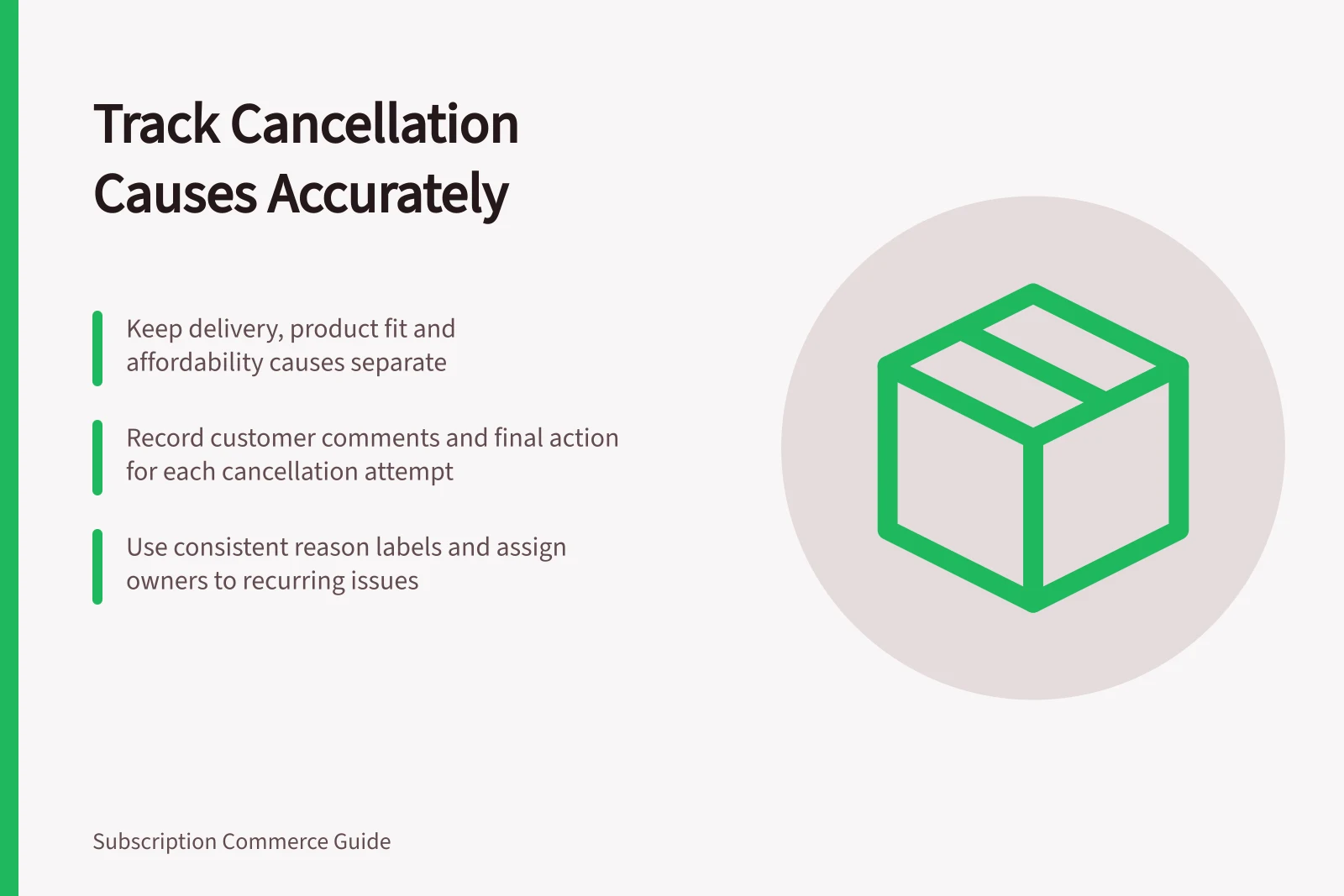
Keep delivery, product, frequency and price complaints distinct when analysing subscription cancellations and retention offers.
Analyse cancellations by keeping distinct customer problems separate. “Too much product”, “delivery was late” and “too expensive” may lead to the same decision, but grouping them as “value” obscures what must change.
Record the event before interpreting it
For each cancellation attempt, retain the subscription and product, date, selected answer, optional comment, offer shown and final action. Record whether the customer cancelled, paused, skipped or left the flow without acting.
If a customer has several subscriptions, cancelling one product is not necessarily the loss of the whole account.
Keep the customer’s words alongside a small set of cause categories, such as delivery, product fit or quality, quantity or frequency, affordability, account experience and no longer needed. Use “unknown” when there is no answer. Silence is not evidence of a particular complaint.
Preserve mixed causes
Suppose a customer writes, “The last box arrived late and I already have enough for a month.” Code delivery and surplus product separately. If a report requires one primary cause, document how it was selected and retain the second cause. Otherwise, delivery complaints filed under frequency can vanish from the delivery review.
Separate a reported event from an explanation. “Parcel arrived after the promised date” is a claim to check against the order. “The carrier caused the cancellation” is an inference that needs more evidence.
Field to retain / Purpose
- Selected answer and comment
- Keeps the original account
- Primary and additional causes
- Preserves mixed reasons
- Product, plan and subscription age
- Locates recurring patterns
- Offer and final action
- Separates feedback from the response
- Later charge or order
- Shows what happened after the flow
Check what the chart counts
Count flow entrants, survey respondents and completed cancellations separately. A percentage based only on answers excludes people who skipped the question. Check the reporting system’s definition of each reason label before interpreting or comparing counts.
Treat labels such as “No Response” according to the reporting system’s documented definition. Do not assume they describe a specific customer action or indicate durable retention.
A few comments can reveal a defect without establishing how common it is. Review patterns by product and fulfilment cycle, then inspect the underlying cases.
Assign an owner to each recurring cause and record when a remedy began. Compare later complaints and cancellations using the same reason definitions; changing categories midway can make a reporting change look like an operational improvement.
Key Metrics to Track During Cancellation Analysis
- Flow Entrants
- Total customers entering cancellation prevention flow
- Survey Respondents
- Customers who provided a reason for cancellation
- Completed Cancellations
- Customers who completed cancellation after the flow
- Skipped Questions
- Customers who did not select a reason but exited the flow