
Billing Operations
Part of Subscription billing operations
Reconciling prepaid subscriptions with delivery commitments
Track each parcel funded by a prepaid subscription and resolve the deliveries still outstanding.
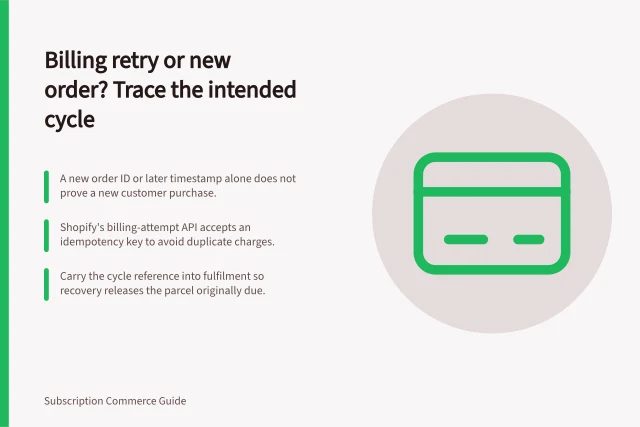
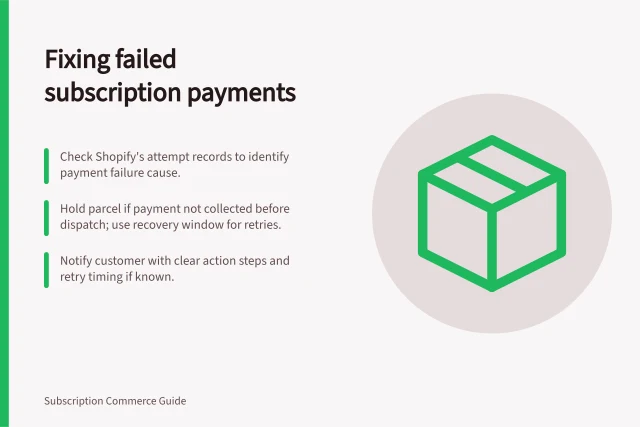
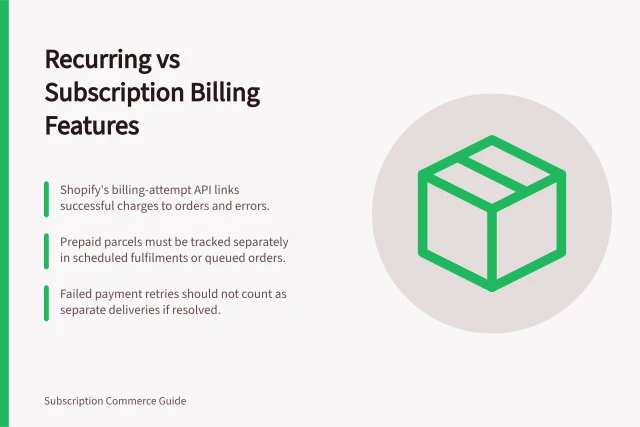
Reconcile each prepaid subscription against every delivery the customer bought, including parcels due when no new charge occurs. Start with the payment and the exact delivery promise. Keep each promised parcel visible until supplied or its obligation is resolved.
Build the ledger from the promise
For each purchase, record the order or contract, amount collected and any refund, promised deliveries, their contents or selection rule, recipient, planned fulfilment windows and renewal terms. Give every promised parcel its own reference. Payment records alone cannot show whether the full commitment was met.
Track each parcel as scheduled, due, supplied or unresolved, and note changes and remedies separately. Define when a parcel counts as supplied and retain dispatch evidence. A parcel marked dispatched can still have an open damage or non-receipt case; a replacement or refund needs its own recorded outcome.
Compare the records
Record / Question it answers
- Payment and refund history
- What was collected or returned?
- Prepaid order or contract
- What did the customer buy and on what terms?
- Delivery ledger
- Which promised parcels remain due or unresolved?
- Fulfilment and remedy records
- What was sent and how was a problem resolved?
Shopify shows why these views differ: one advance-paid order can contain several scheduled fulfilments. Its order changes from Scheduled to Unfulfilled when a fulfilment becomes due, then returns to Scheduled after that fulfilment until the next date.
Key Records in Subscription Reconciliation
- Payment and refund history
- What was collected or returned?
- Prepaid order or contract
- What did the customer buy and on what terms?
- Delivery ledger
- Which promised parcels remain due or unresolved?
- Fulfilment and remedy records
- What was sent and how was a problem resolved?
Resolve changes without losing deliveries
A skip, pause, cancellation or address change may affect future renewals differently from parcels already paid for. Identify the specific delivery affected and check the offer's terms and applicable customer rights. Do not infer from a cancelled recurring plan that every outstanding prepaid parcel was cancelled, refunded or supplied.
Shopify says editing an order does not edit its subscription contract. Check the installed app and affected order before promising a change, and keep a missed or altered parcel open in the ledger until resolved.
Close the term
Before any renewal, compare the original promise with supplied parcels, open remedies, refunds and remaining scheduled deliveries. Tell the customer what remains due and distinguish the next shipment from a renewal payment. A fixed prepaid term does not necessarily renew automatically.
Close the operational record only when each paid delivery is matched to a supplied parcel or a documented resolution. Keep this delivery reconciliation separate from any management allocation of the advance payment or accounting revenue-recognition decision.